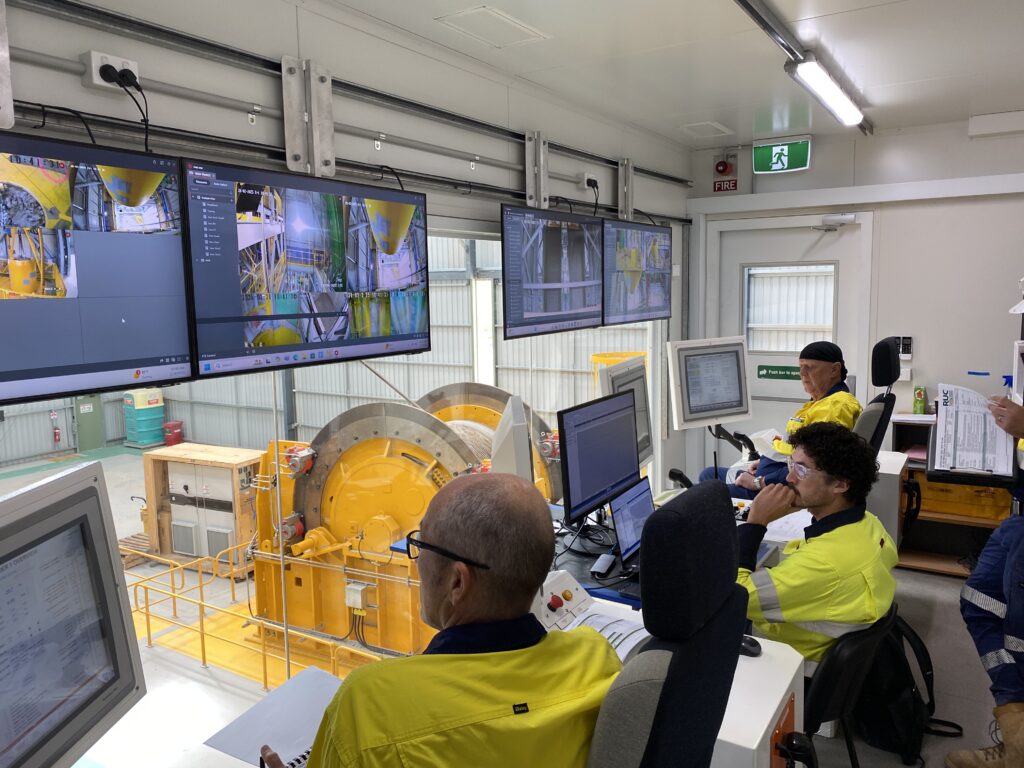
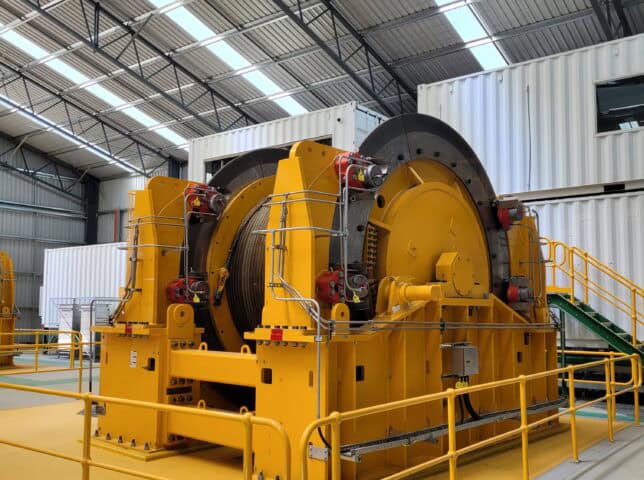
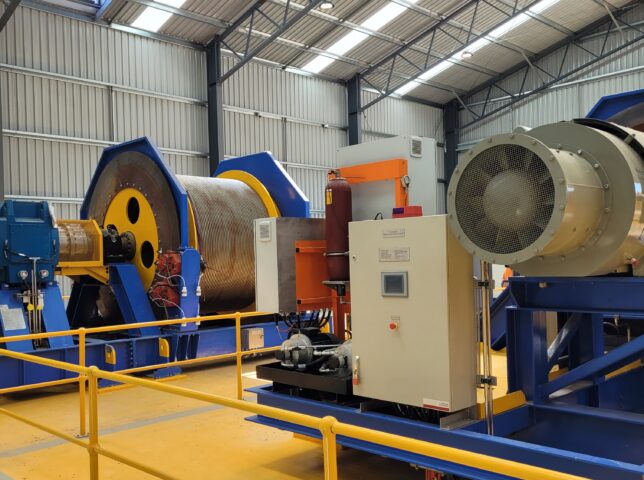
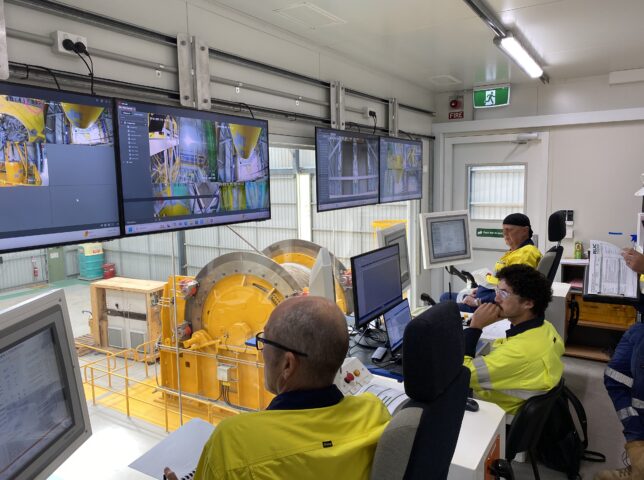
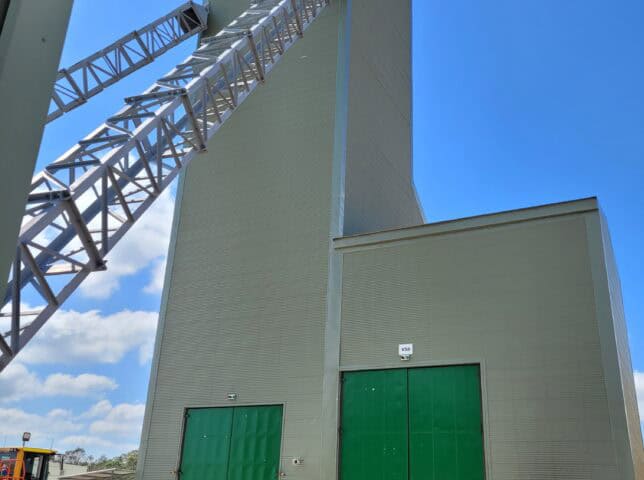
When you’re preparing to sink new shafts, there is no margin for uncertainty. Powered winding systems must be proven safe, compliant and regulator‑ready before people, plant and materials can move underground.
At Appin Colliery, Redpath needed absolute confidence that two new shaft winding systems could be commissioned without delay. This included meeting NSW regulatory requirements, satisfying the Technical Reference Guide (TRG), and protecting workforce safety from day one.
Overview
Shaft sinking at scale
As part of a broader shaft development program, GM3 is constructing two new mine ventilation shafts, VS7 and VS8. To build each shaft, a process known as shaft sinking is used, which involves excavating and removing material from the surface downward, then installing shaft lining to form the permanent shaft structure.
In practice, each shaft requires a powered winding system to safely transport people, equipment and materials during sinking. To enable shaft sinking to commence, both winding systems were required to be fully commissioned, independently verified and registered under NSW compliance requirements.
Redpath Australia held responsibility for winder supply, registration and compliance under the project, and appointed Advitech to deliver independent engineering verification across both systems before operations could commence.
Challenge
Meeting TRG and NSW compliance for dual shaft winder systems
For VS7 and VS8, Redpath required confidence that both new and modified winding system components fully complied with:
- NSW Work Health and Safety Regulation
- The Technical Reference Guide (TRG) for Powered Winding Systems
- Relevant Australian Standards including AS 4730, AS 3990, AS 4100, and AS 3785.
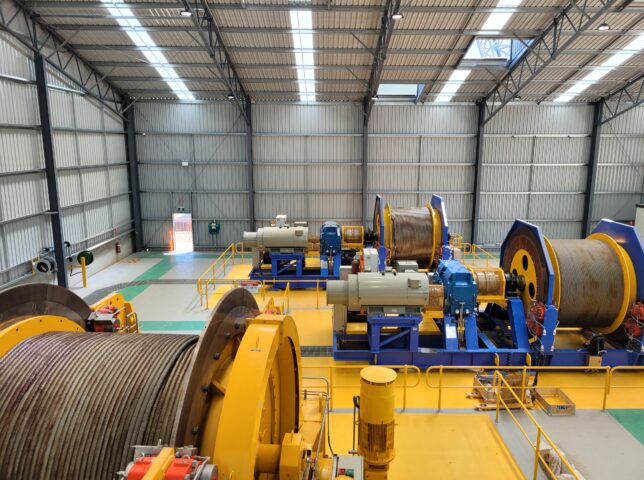
The winding systems involved complex mechanical assemblies, conveyances, seven winding engines across two systems, suspension systems, and headframe towers. These components were new, and many were altered during the project, increasing the level of engineering scrutiny required.
Redpath needed a verification partner with deep TRG familiarity and the capability to work across mechanical, structural, electrical, and functional safety domains simultaneously. Advitech provided clear, defensible, regulator-ready documentation and hands-on commissioning oversight.
Solution
Multi‑disciplinary approach to mine shaft safety and compliance
We undertook a comprehensive suite of engineering verification activities across both shaft winding systems, ensuring each system met TRG and NSW compliance requirements.
- Independent design reviews of stage winders, ropes and suspension components, conveyances, headframe foundations, and structural supports
- FEA and detailed calculations verified against TRG Parts 1, 3 & 4, and Australian Standards such as AS 1403, AS 3990, AS 4100, and AS 3785.4.
- Verification of system modifications rope attachment improvements and guarding installations.
- Functional safety assessment to AS 61508 and AS 62061 for safety related control functions of powered winding systems.
- Electrical design verification to ensure compliance with NSW requirements and AS4730.1
- Collaboration with mechanical and structural teams to ensure saft functions aligned with system design and operational needs.
- Preparation and coordination of comprehensive documentation packages supporting NSW plant design registration and item registration
- Ensuring all verification outputs were clear, complete and regulator-ready
- Onsite inspection during both low-speed and high-speed commissioning phases.
- Witnessing and validating brake performance, safety function tests, and operational mode transitions.
- Reviewing all commissioning documentation — ITPs, ITRs, Certificates of Conformance, and change management registers.
- Confirming installation matched registered design documentation.
Outcomes
A clear path forward
With our independent verification complete, Redpath was able to proceed with shaft sinking operations at VS7 and VS8 with full regulatory confidence.
- Engineering verification packages were accepted by the NSW Regulator, supporting plant design and item registration for both shafts
- Commissioning validation by an independent verifier provided the assurance required for personnel and equipment transport to commence.
- A need for additional critical operational controls was identified during the verification process, reducing residual risk to the workforce.
- Comprehensive, defensible documentation was delivered across both systems.
Mine winder verification is a high-consequence, low-margin-for-error discipline. Projects of this complexity involving new equipment, mid-project modifications, and dual concurrent shaft systems, require an experienced verification partner who can work across all engineering domains without gaps. Integrated, multi-discipline verification from a single accountable team removes unnecessary time delays and risk.
Ready to verify your winding system?
If you are planning shaft sinking operations or need independent verification of a powered winding system in NSW or nationally, Advitech’s team can support you from design review through to commissioning audit and registration.
Talk to our team: enquiries@advitech.com.au | advitech.com.au